
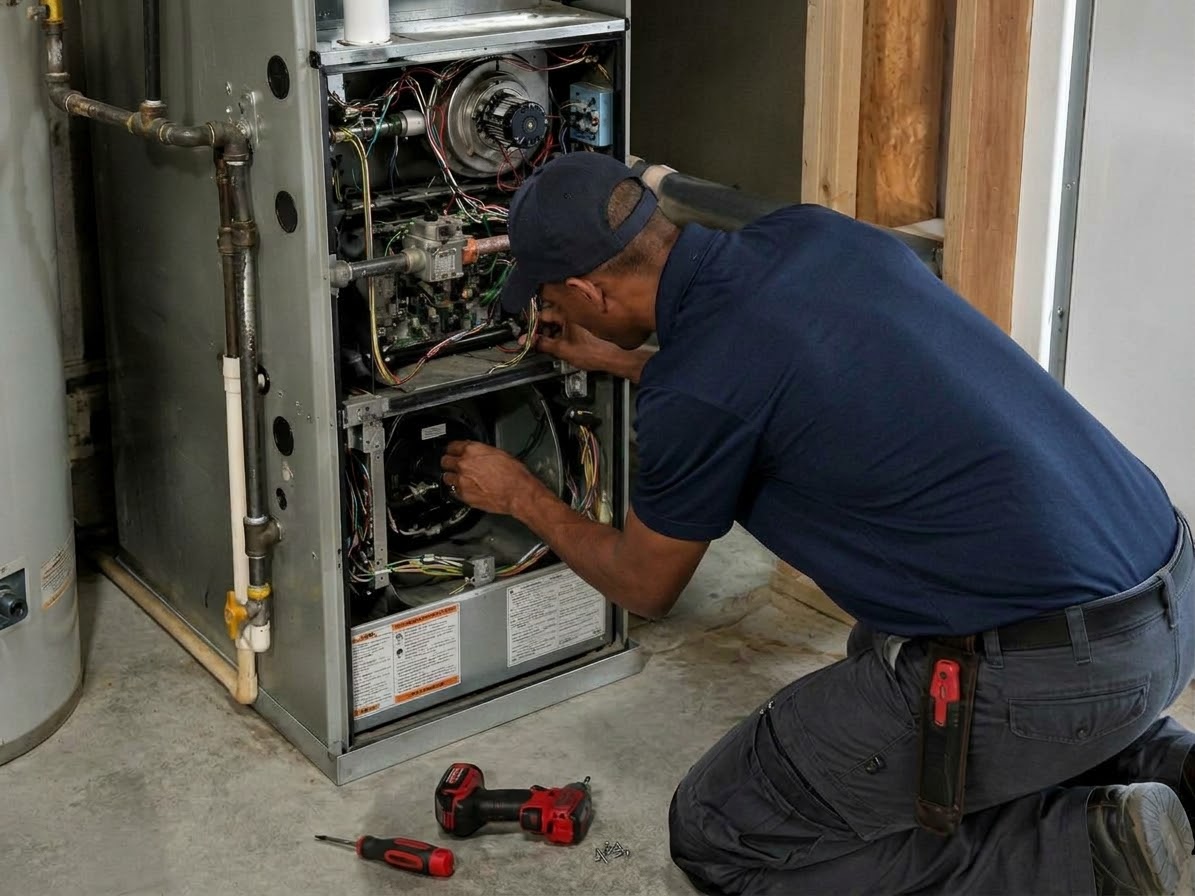
Urgent furnace help for St. Thomas homes
A no-heat situation is not always caused by the same part or condition. Thermostat settings, airflow restrictions, ignition concerns, safety controls, electrical components, venting, and the furnace's overall condition can all affect operation. When a St. Thomas home is getting colder, the furnace is repeatedly shutting down, or rooms are receiving little heat, a professional assessment can help identify what should be investigated. Forest Pro Heating & Cooling can review the symptoms and accessible equipment conditions, then explain practical next steps. Depending on the findings, the path may involve a focused repair, further troubleshooting, or a conversation about an older furnace with recurring concerns. If you smell gas, suspect carbon monoxide, see smoke, or have an immediate safety concern, leave the area and contact the appropriate emergency service or utility provider rather than operating the furnace.
Common concerns we can assess
- The furnace will not start, stops before heating the home, or leaves the house without heat
- Registers are blowing cool air, airflow is weak, or some St. Thomas rooms are becoming much colder than others
- The furnace is cycling repeatedly, making banging, rattling, grinding, or buzzing sounds, or displaying an unfamiliar message
- A household has noticed a burning smell, water around the furnace, a tripped breaker, or another sudden change in operation
What the technician checks
- Thermostat settings, the call for heat, and visible control information may be reviewed
- Filters, accessible airflow paths, duct connections, and supply registers may be checked for conditions affecting heat delivery
- Ignition sequence, burner operation, electrical components, and safety controls may be assessed as appropriate
- Visible venting, condensate-related components, error indicators, and the general furnace condition may be examined
Why professional service matters
- A clearer understanding of what may be behind an urgent no-heat or poor-heating concern
- Practical guidance on whether the immediate issue may call for repair, further diagnosis, or future replacement planning
- A more informed next step for restoring comfort while considering the condition of the existing furnace
Your questions, answered
What furnace problems should I treat as urgent?+
No heat in cold weather, a furnace that will not stay on, very weak airflow, and sudden unfamiliar noises are reasons to request help promptly. Do not operate the furnace if you smell gas, suspect carbon monoxide, see smoke, or believe there is another immediate safety risk. Leave the area and contact the appropriate emergency service or utility provider.
What can I check before requesting emergency furnace repair in St. Thomas?+
You can note the thermostat setting, whether the furnace display shows a message, which rooms are cold, and when the concern began. A clean filter and open supply registers can be helpful to verify if it is safe to do so. Avoid opening the furnace or attempting gas, electrical, ignition, or venting work yourself; those details can be assessed professionally.
Can a furnace that is still running need an urgent assessment?+
Yes. A furnace that runs but blows cool air, shuts down repeatedly, makes severe new noises, or cannot keep the home comfortable may still need prompt attention. Those symptoms can have different causes, so an assessment can clarify the condition and the most practical next step rather than assuming a single part is responsible.